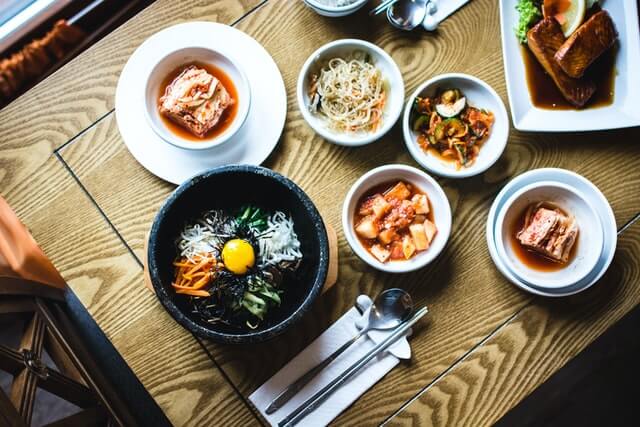
There are foods that do not simply sit on the plate. They call us by name.
They remember kitchens we have left, hands we can no longer touch, countries we crossed, languages we lost, and versions of ourselves we almost forgot. A bowl of stew. A loaf of bread. A mango sliced over the sink. A pot of rice. A piece of chocolate melting slowly on the tongue. A recipe written in someone else’s handwriting.
These are not just meals. They are archives.
I have been thinking lately about the foods that remember us. The ones that return us to a grandmother’s kitchen, a childhood table, a country we left, a season of grief, a gesture of care, a story we did not know we were still carrying.
Food has always done this for me.
Before I had the language for ecology, I had chocolate. Before I understood how deeply our lives are tied to distant soils, invisible labor, and planetary systems, I encountered a cacao pod and began to ask why. Why did this sweet thing I loved begin in a tree so far from where I ate it? Whose hands touched it before mine? What histories were hidden inside its pleasure? What worlds did it carry?
That question never really left me.
Over time, I began to see that food is one of the most intimate ways the world enters us. We take it into the body, but it also takes us somewhere: into memory, into family, into migration, into land, into history, into responsibility. A single dish can hold a map. A recipe can carry a lineage. A taste can awaken a place.
And for children especially, food may be one of the most powerful doorways into learning because it begins with something they already know. Children know hunger. They know sweetness. They know the smell of something familiar cooking. They know the difference between food that feels like home and food that makes them feel out of place. They know the emotional geography of lunchboxes, family tables, forbidden snacks, holiday meals, school cafeterias, and the foods that other children recognize or do not recognize.
A child’s food story is never only about food.
It may be about a parent who works late but still leaves soup on the stove. It may be about a grandmother whose recipe was never written down. It may be about migration, when familiar ingredients become hard to find and substitutions become a language of survival. It may be about shame, when the food a child brings to school smells different from everyone else’s. It may be about pride, when that same food becomes the thing they finally want to share.
It may be about belonging.
But food also asks us to look beyond the self. Nothing we eat arrives alone. A piece of chocolate carries a tree, a farmer, a climate, a trade route, a history of extraction, and a child’s delight. A loaf of bread carries grain, yeast, hands, time, heat, hunger, and home. A mango carries weather, soil, distance, ripeness, longing. Even the simplest meal is full of relationships.
This is the beginning of Food Story Studio: a way of using food memories as doorways into culture, migration, ecology, ancestry, and belonging. It begins with a simple question:
What is a food that remembers you?
Not: What is your favorite food?
Not: What do you like to eat?
But: What food carries a story you may not have known how to tell?
That question opens something. It slows people down. It moves them from preference to memory, from consumption to relationship, from the individual plate to the wider world. It allows a child, a parent, an educator, an elder, or a community member to begin with taste and arrive somewhere much larger.
Because the foods that remember us are never only about the past.
They are also invitations. They ask what we will carry forward. They ask whose stories we will preserve. They ask what kinds of worlds we are feeding, and what kinds of worlds are feeding us.